
Sex Offender Checks in Greenbrier County
The West Virginia State Police Sex Offender Registry is the controlling public source for Greenbrier County. It lists people who currently have public registration duties under West Virginia law. It does not function as an open name search of the State Police Criminal Identification Bureau. That distinction matters. A person may have a court or arrest record without ever having a registry duty, while a registry entry reflects a specific statutory obligation that remains active.
Begin with the state portal and set County to Greenbrier. A name search may be narrowed with a first name, city, ZIP code, street, or address search when the current interface offers those controls. If the concern crosses a state line, the U.S. Department of Justice national search adds a second layer. Always return to the state source profile before acting on a national result because the jurisdiction that supplies the record controls its status and detail.
Greenbrier Registry Versus Criminal History
A Greenbrier County registry result answers a narrow question: does this person have a current, publicly displayed duty under Chapter 15, Article 12? It does not answer whether a person has any criminal history. The free Magistrate Record Search covers lower-court cases, the Circuit Clerk maintains felony files, and WVDCR publishes custody data. Each source has its own record purpose.
That split also explains why a blank Greenbrier County registry result is not proof of a clean record. A different spelling, an address in another county or state, a delayed update, or the absence of a statutory registration duty can all produce no match. Use the registry for personal, family, and community safety. Use court files when the goal is to understand a charge and its disposition.
Note: Registry status and criminal-history status are separate legal facts, so one search should never be described as a substitute for the other.
How to Search the West Virginia State Police Sex Offender Registry
The state search supports both name-based and place-based paths. Broad Greenbrier County searches may return more people than expected, while a narrow address or name search can miss a record when spelling or location data has changed. Treat the first result list as a starting point and read the full source profile before drawing a conclusion.
- Open the WVSP registry and read the current terms and disclaimer before searching.
- Select Greenbrier in the County field, or enter a name, city, ZIP code, or street detail that is known.
- Review the result list carefully. Compare aliases, physical details, location, and profile status rather than relying on a name alone.
- Open the full profile, note its update and registration information, and contact law enforcement about a suspected error or noncompliance.
| Field Label | Type | Required | Notes |
|---|---|---|---|
| Last Name | Text | No | Spelling and aliases can affect a name search. |
| First Name | Text | No | Narrows results for a shared surname. |
| County | Dropdown | No | Select Greenbrier for a county-focused result. |
| City | Text or dropdown | No | Filters by the address locality recorded in the registry. |
| ZIP Code | Text | No | Uses a five-digit locality filter. |
| Street or Address | Text | No | Supports geographic searching when the live form offers it. |
| Radius | Dropdown | Address search only | Confirm the live radius choices because the interface can change. |
| Map or List | View control | No | Display options can vary with the current interface. |
The official WVSP search form shows how state fields are combined for a county lookup.
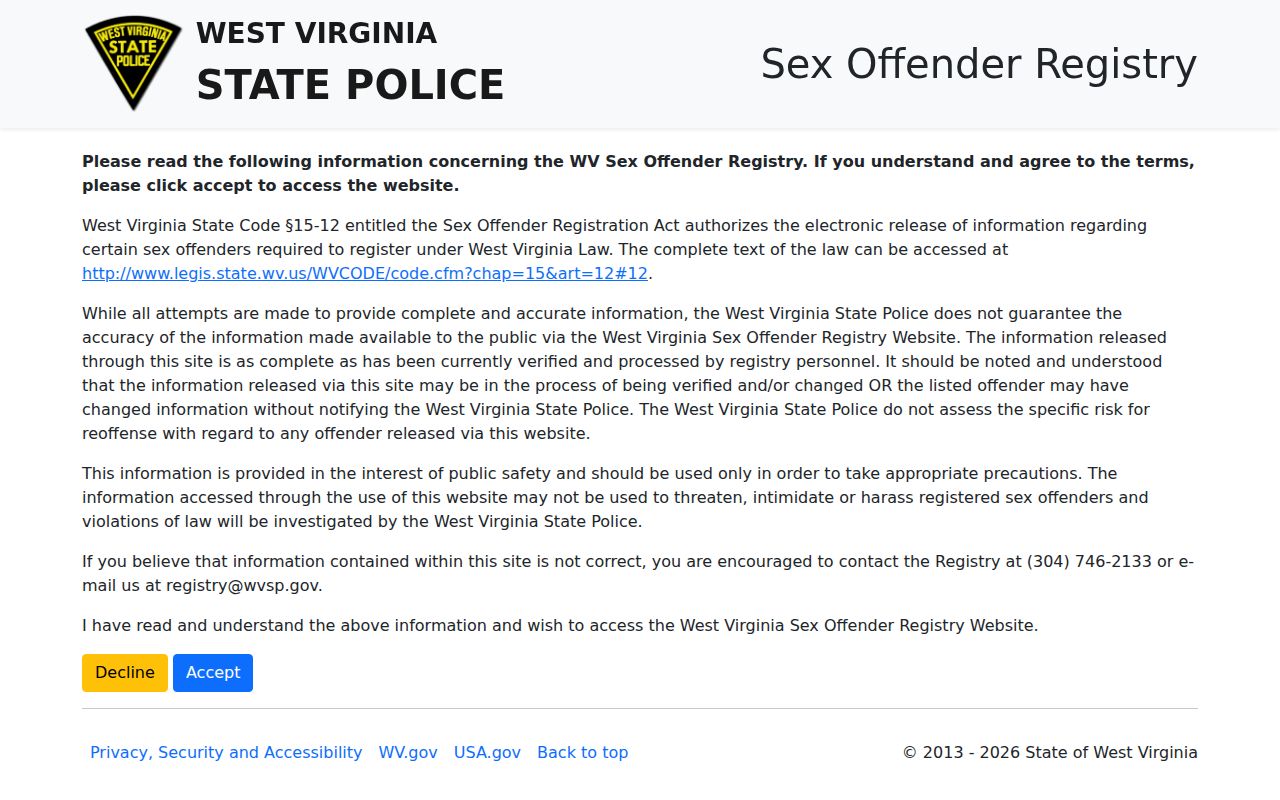
The captured form reinforces the safest method: filter first, then confirm every match through the complete state profile.
Greenbrier Registry Roles Split Two Ways
The Greenbrier County Sheriff’s Office is the local route for registration and verification questions. Its Lewisburg law-enforcement line is 304-647-6634. The research found no separate county registry portal, public appointment schedule, fee list, or sheriff app alert. Call the law-enforcement office for the current counter and hours instead of appearing at a tax counter or assuming that a general county office handles registration.
WVSP Criminal Identification Bureau personnel manage the statewide record, check submissions, and transmit information to the national registry. The agency’s FY2024 report describes work to process and verify submissions for prompt and accurate entry, along with digitization of deceased and expired files. Thus, a Greenbrier County concern can involve two offices: the sheriff for local routing and WVSP for the statewide public profile. The county phone directory confirms local office lines, while the county government portal provides the official department route if a contact changes.
Greenbrier County Sheriff
Law Enforcement Branch
PO Box 347
Lewisburg, WV 24901
304-647-6634
Call for the current local registration or verification route.
Inside a Registry Profile
A public registry profile combines identity, location, status, and qualifying-offense information. The exact display depends on current law and the facts of the record. Some fields may be blank or withheld. Compare more than one field when names are similar, and do not save or spread private identifiers beyond the public-safety need that prompted the search.
| Name and Aliases | Current name plus aliases that may help distinguish a match. |
|---|---|
| Photo and Description | Registration photograph and available sex, race, height, weight, hair, eye, scar, mark, or tattoo details. |
| Registered Address | Residence or other location information made public by the Act. |
| Qualifying Offense | Offense description, jurisdiction, conviction date, and victim category when publication is allowed. |
| Registration Dates | Dates tied to registration, verification, or updates where displayed. |
| Status | Current registration or compliance information reported in the public profile. |
| Other Public Facts | Vehicle, employer, or school information when the statute makes the specific item public. |
Profile details describe the registration record. They do not establish current conduct, predict risk, or replace the court file for the underlying case.
When a Greenbrier Registry Address Looks Wrong
An address can appear stale for several reasons. A person may have moved, local verification may still be in process, or a map tool may place a marker imprecisely. Radius results are a search aid, not a survey of property lines. Read the profile’s status and dates, then compare the address text with the map rather than treating the pin as exact.
Report suspected noncompliance to the Greenbrier County Sheriff or WVSP. Give the officer the profile name or link and describe the specific discrepancy. Do not visit the address, confront anyone, publish an accusation, or try to conduct a personal compliance check. Law enforcement can compare the report with information that is not part of the public display.
West Virginia Registration Levels and Requirements
West Virginia Code Chapter 15, Article 12 ties a registration duty to the qualifying offense and statutory category. West Virginia’s framework should not be relabeled with federal Tier I, II, or III names. Some duties last ten years. Aggravated, repeat, and sexually violent categories can require lifetime registration. Verification and the public fields shown also depend on the current statute.
| Statutory Framework | Duration | How to Verify the Duty |
|---|---|---|
| Qualifying registration duty | Ten years for some registrants | Read the current offense-based provisions in §§15-12-2 through 15-12-10 and the source profile. |
| Aggravated, repeat, or sexually violent category | Lifetime registration can apply | Match the exact offense and facts to the current statute; do not infer a federal tier. |
| Verification and public display | Depends on the statutory category | Confirm the current duty with WVSP or the local registration office. |
Amendments can change offense lists and duties. The live statute and the official profile control over a summary, and a registration term should never be guessed from the offense title alone.
NSOPW Extends Greenbrier Registry Searches
The National Sex Offender Public Website is useful when a person may live, work, attend school, or register beyond West Virginia. It searches participating jurisdictions through one federal interface. Captcha and current terms may apply. Because the data still comes from state, tribal, and territorial sources, open the linked source record for the most direct status information.
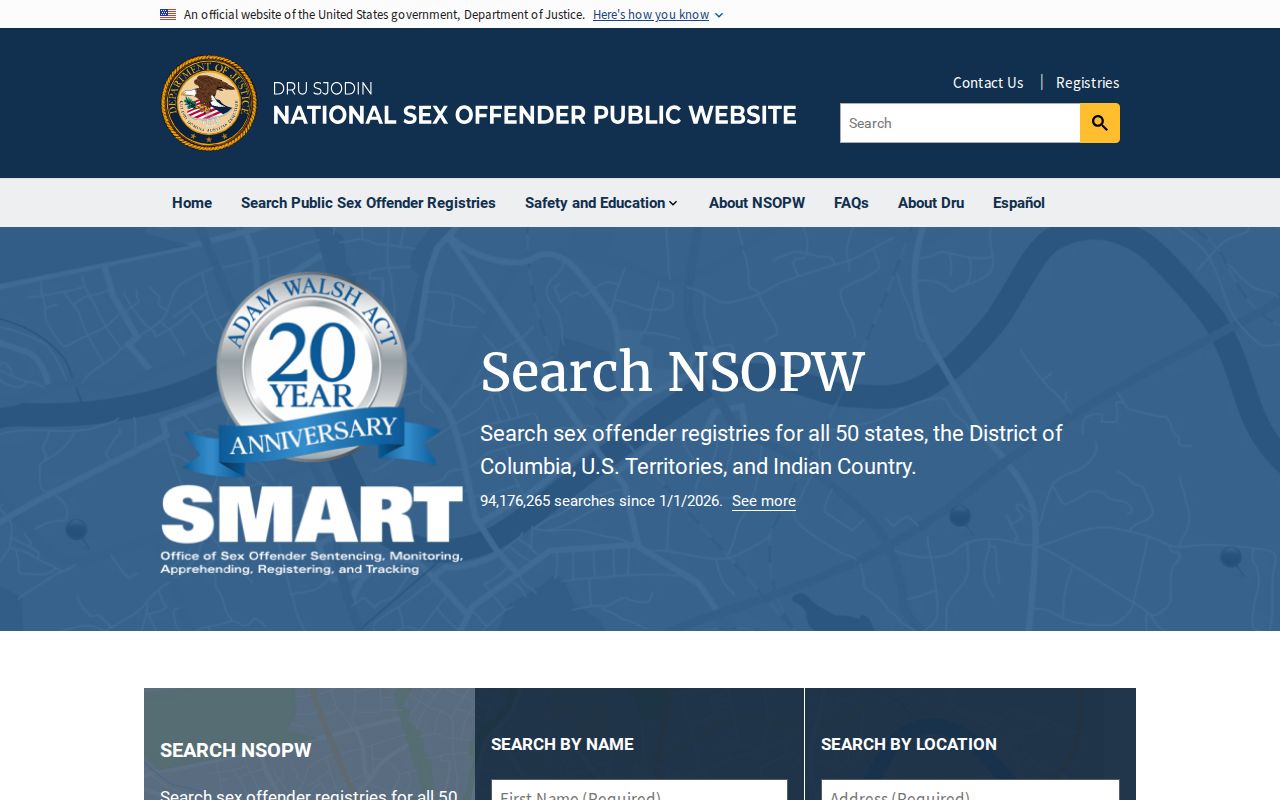
The national view broadens the geographic sweep, but the WVSP profile remains the key source for a person registered in Greenbrier County.
Use both systems when a search involves a recent move or a nearby state line. Different refresh times can produce temporary differences. If the national result and West Virginia profile do not match, report the difference to the source jurisdiction rather than choosing the result that seems more current.
Greenbrier Registry Searches Can Miss
“Not found” has a limited meaning. The person may use another spelling or alias, may be registered in another county or state, may not be subject to public registration, or may have a record update in progress. Try name variants one at a time, remove an overly narrow city filter, and run a county search. Then check NSOPW if another jurisdiction is plausible.
A failed registry search still does not justify a broad accusation. For a known court matter, check the court record. For a suspected registration violation, contact law enforcement. That two-track response respects both the limits of the search tool and the public-safety role of the registry.
Community Notification and Lawful Use
Registry information supports awareness and practical safety planning. Read the offense, date, registration status, and source jurisdiction together. Do not infer present conduct or current dangerousness from a label alone. Public display also does not transfer investigative or enforcement power to a private searcher.
Use the registry lawfully: Chapter 15, Article 12 governs registration duties and penalties. Threats, harassment, trespass, intimidation, or vigilantism can violate West Virginia law. Report a concern to the Greenbrier County Sheriff or WVSP instead of confronting a registrant or household.
The state portal’s conditions should be read each time because public interfaces and notices can change. Information may lag a move or status event. Law enforcement, not a map pin or crowd report, is the proper route for confirming noncompliance.